Here is a pattern every regional manager recognizes. A resident mentions a gate issue during a routine inspection. The gate gets fixed. Everyone moves on.
On a recent industry podcast, multifamily expert Joe Summers described exactly that scenario, with one difference: the operator agreed to audit the rest of the portfolio. Across roughly 47 to 49 owner-managed properties, the audit found that a quarter of them had gate issues nobody at the management level knew about. The problems were not showing up in work orders. They were showing up in online reviews and Reddit threads, where frustrated residents go when the community stops listening (watch the full conversation).
That gap between what is broken and what is known is the real access control problem. Multifamily operations run reactive by nature: Gatewise Multifamily Expert, Joe Summers estimates 80 percent or more of the daily workload is responding to things that already went wrong. Properties have preventive routines for plenty of building systems, but gate access, door access, and amenity access usually get attention only after a failure, a complaint, or a one-star review.
The fix is not more urgency. It is a proactive approach to access management, and it starts with an audit anyone can run this week.
Before the checklist, one observation worth sitting with: it is remarkably common to find a community with three or four gates where one or two sit open around the clock. As he put it, if one gate is open, they are all open.
That is false security, and false security is worse than no security. Ownership is paying for gate access control hardware, remotes, and maintenance while getting none of the protection. Residents notice, prospects notice on tours, and the community absorbs the cost of a multi-family residential gate security entry management system without the benefit. The same logic applies to a self-storage facility with a keypad code half the town knows, or a mixed-use building where the residential floors are technically restricted but the elevator lets anyone ride.
Confidence comes from access that actually works, is actually monitored, and is actually logged. Here is how to check.
This works for a garden-style apartment community in Houston, a student housing property in Gainesville, a self-storage facility outside Phoenix, or an office site in the Northeast. Adjust the checklist to the property type; keep the method.
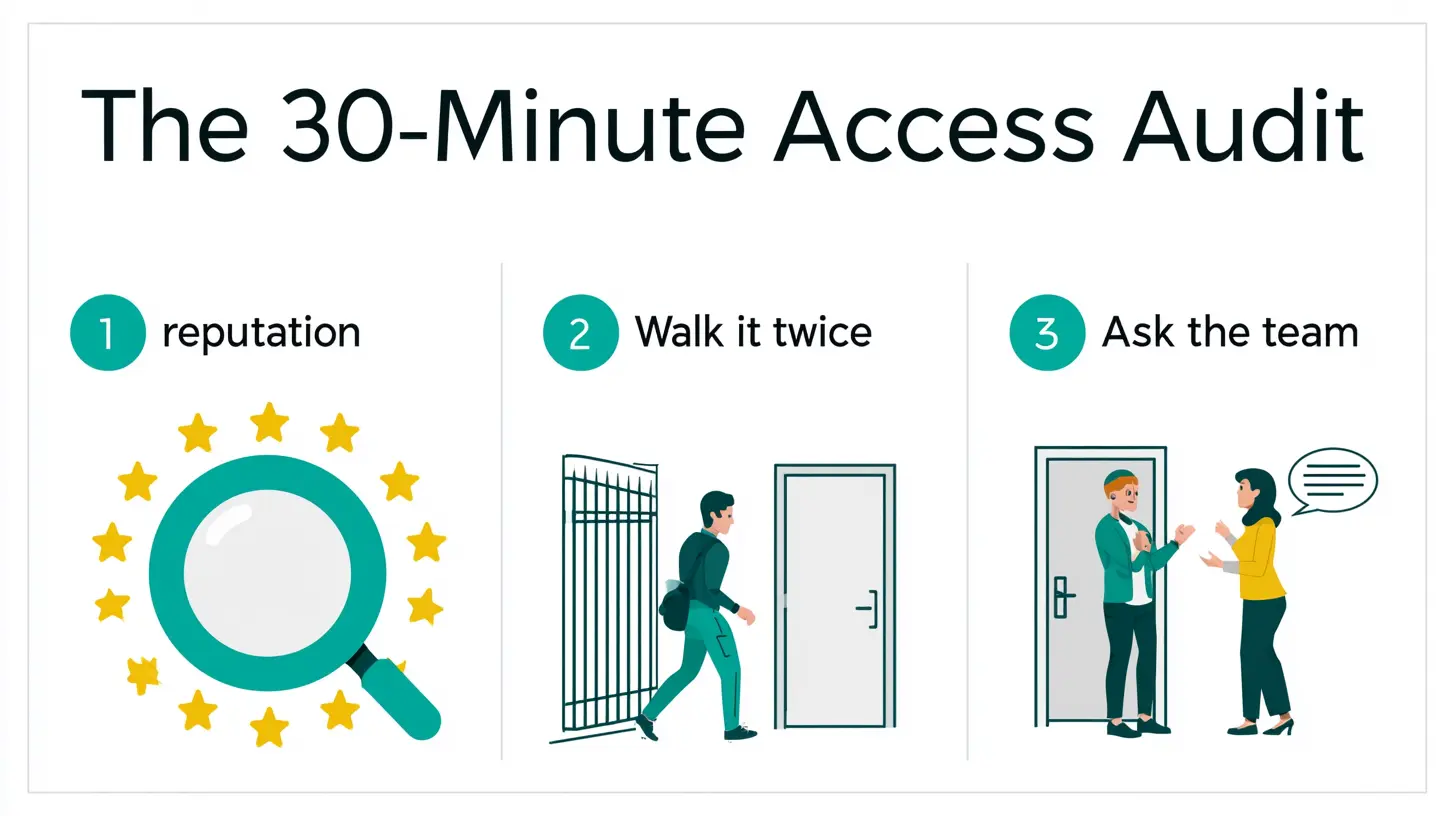
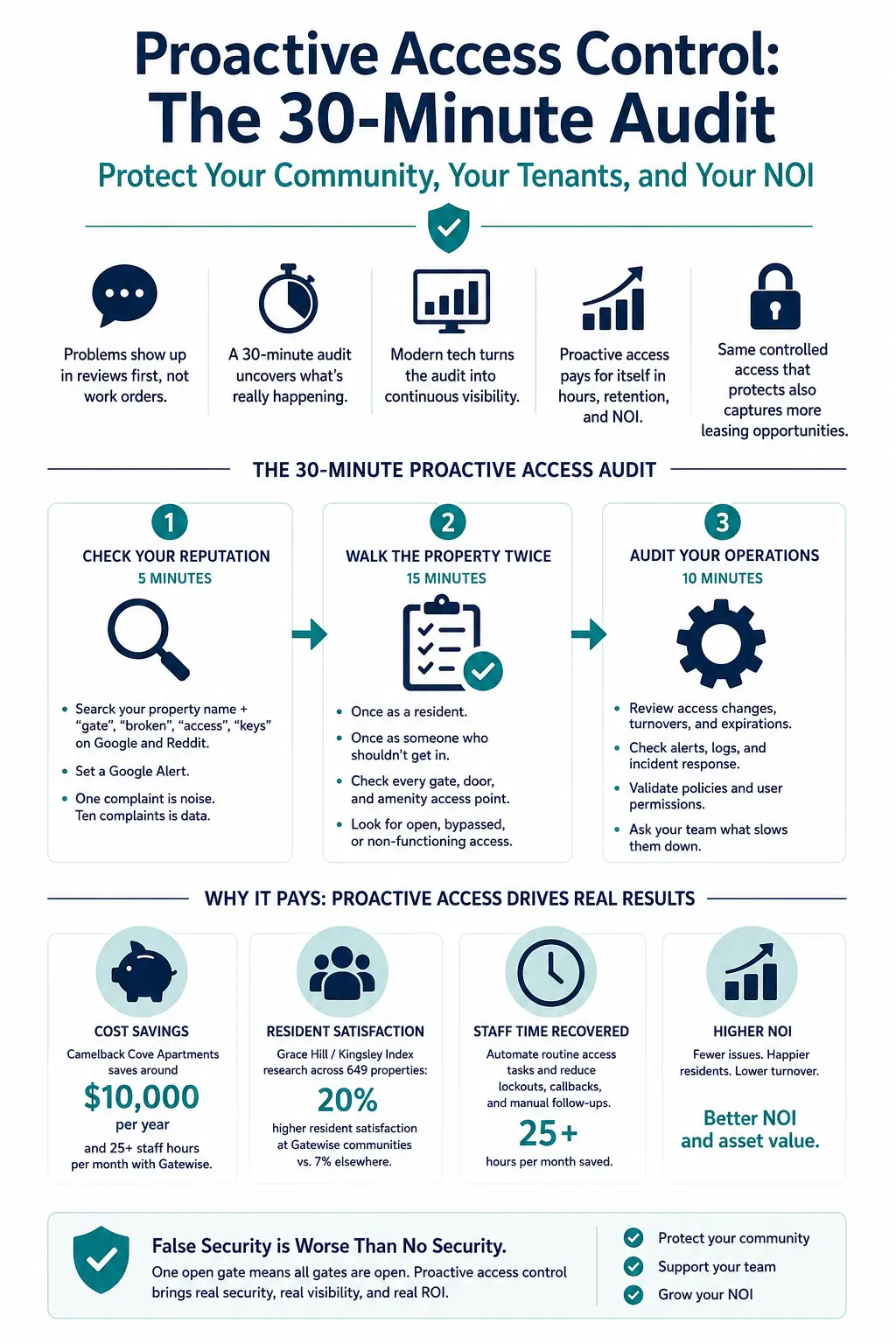
Search your community or facility name plus words like "gate," "broken," "access," and "keys" on Google and Reddit. Set a Google Alert if you have not. As Joe Summers noted on the podcast, unhappy residents used to tell ten friends; now they tell the world, and many operators discover access problems from review trends rather than from their own reporting. One complaint is noise. Ten complaints is data.
Gatewise Multifamily Expert, Joe Summers recommends walking the community two ways: once as a resident, once as someone trying to get in who should not. Do not announce the inspection; you want the real state of the property, not the prepared one.
Garden-style apartments: Every perimeter gate, every pedestrian gate, the pool gate, the fitness room. Are any propped or stuck open? Garden-style communities are typically sprawling, multi-gate, and staffed lean, which is exactly why a single unmonitored gate can stay open for months.
Mid-rise and high-rise: Garage entry, lobby doors, amenity floors, package room. Can a non-resident ride the elevator to a residential floor? Is the lobby intercom system, or its legacy call box, actually answered when someone buzzes?
Student housing: Is one shared gate code circulating through the entire building and its social calendar? During the last turn, did departing residents actually lose access on their lease end date?
Self-storage: Do self storage gate access systems restrict tenants to the gates they should use, or does one code open everything? Can you pull an access history for a specific tenant or a specific gate right now, in minutes?
Commercial and mixed-use: Are former employees and former vendors still credentialed? Role-based scoping is the test: the pool technician's credential should open the pool gate, not the corridors.
Onsite teams know the problems even when they do not know the solutions. Summers asks about propped doors, garage blind spots, and after-hours patterns, and notes that staff often need permission to talk openly about what could go wrong, because they feel responsible for it. Ask directly: what access issue did you work around this week? Where do you send a guest or delivery driver who cannot get in? How long does a lockout call take?
Then ask the uncomfortable systemic questions. Who removed the credentials of the employee who left in March? When a resident moves out, how long does their apartment key fob keep working? If the answer involves someone remembering to do something manually, you have found the gap.
Most audits do not surface one broken gate. They surface the absence of a system that would have caught the broken gate on day one.
That is the difference between access hardware and access control technology. Legacy setups (fobs, clickers, shared keypad codes, a physical call box at the entrance) are point solutions. Each one fails silently, and each one requires a human to notice, report, and chase the failure. A modern smart access platform inverts that:
The system tells you before residents do. Every access point on the Gatewise platform reports its status continuously, so the portal can flag an outage or an issue before the first complaint. Summers described this as the core shift: one person, in one place, can see the health of every access point across an entire portfolio.
Credentials manage themselves. With deep integrations into Yardi, RealPage, Entrata, and ResMan, access provisions automatically at move-in and revokes automatically at move-out. The former-resident-with-a-live-fob problem, and the annual key scramble of student housing turn season, disappear as categories.
Everything is logged. Vendor entries, guest entries, delivery access, amenity usage: recorded with timestamp, access point, and credential. When a question comes up, the answer is an export, not an investigation.
Reliability is engineered in. Cellular-first connectivity keeps gates and doors working when building internet does not, and battery backup on Gatewise hardware acts as an uninterruptible power supply for critical access points through storms and outages. In gate-dominant, storm-exposed markets, that is not a footnote; it is the difference between an access system and an access liability.
Guests stop being a gap. Gatewise Guest Access replaces the failure-prone physical call box at the entrance. (If you are wondering what a call box is: the legacy dial-up intercom panel at a gate or lobby that connects visitors to a resident or office, and one of the most maintenance-hungry pieces of hardware on any property.) With Gatewise, a visitor scans a QR code and connects to the resident or team by video, while residents send time-limited Visitor Keys that expire automatically. No directory hardware to maintain, no shared code that lives forever, and every entry logged.
Here is the part of proactive access control that most security conversations miss: the same technology that keeps unauthorized people out can let the right prospects in, on their schedule, with full accountability.
Most leasing offices run roughly 9 to 5 on weekdays. Most prospects work roughly 9 to 5 on weekdays. As Summers put it on the podcast, an office closed evenings and weekends has eliminated most of its audience. Communities either lose that demand or pay staff to extend hours.
Self-guided tours solve it with the exact discipline this article is about. A prospect gets secure, identity-verified, time-limited access to a defined route. Every door they open is logged. The access expires automatically. Unlike a virtual apartment tour, the prospect experiences the real community, and unlike an unsupervised walk-through, the operator controls and records the entire visit. Summers' advice for leasing agents applies here too: never wing the route. Define the best path through the community and let the platform enforce it.
The same proactive access principles hold end to end: controlled access in, logged movement through, automatic expiration out. Security and leasing velocity from the same infrastructure.
Access control priorities are not uniform across the country. The physical stock, the weather, and even the definition of "the front door" change by market, and a serious audit reflects that.
Texas. Texas is the deepest data set in the access control conversation: the Grace Hill / Kingsley Index research tracked 449 properties in Texas alone, more than California and Georgia combined, reflecting how gate-heavy and garden-style-heavy the state's multifamily stock is. It is also the hardest state in the country on access infrastructure: Climate Central found Texas recorded 210 major weather-related power outages from 2000 to 2023, the most of any state, across winter storms, hurricanes, severe weather, and extreme heat. For a Dallas or Houston portfolio, that makes two audit questions non-negotiable: does every gate keep working when the grid does not (battery backup functioning as an uninterruptible power supply at each access point), and does it keep working when building internet drops (cellular-first connectivity)? Texas operators like Q10 Property Management and Houston-based Indus Property Management, running 38 communities and 10,800 units on one platform, standardized on Gatewise in exactly this environment.
Florida. Florida's audit priority is continuity through storm season. The Florida Climate Center notes that every stretch of Florida's coastline has been impacted by at least one hurricane since 1850, which means no Florida community gets to treat power and connectivity loss as a rare event. When an outage hits during or after a storm, gates that fail open create the false security problem at the worst possible moment, and gates that fail closed lock out residents, emergency contacts, and restoration vendors. The Florida audit adds a question the checklist above implies: what is the documented behavior of every access point during an outage, and who verified it since last hurricane season? Cellular-first hardware with battery backup, plus remote portal access from wherever the team evacuated to, is what continuity looks like in practice.
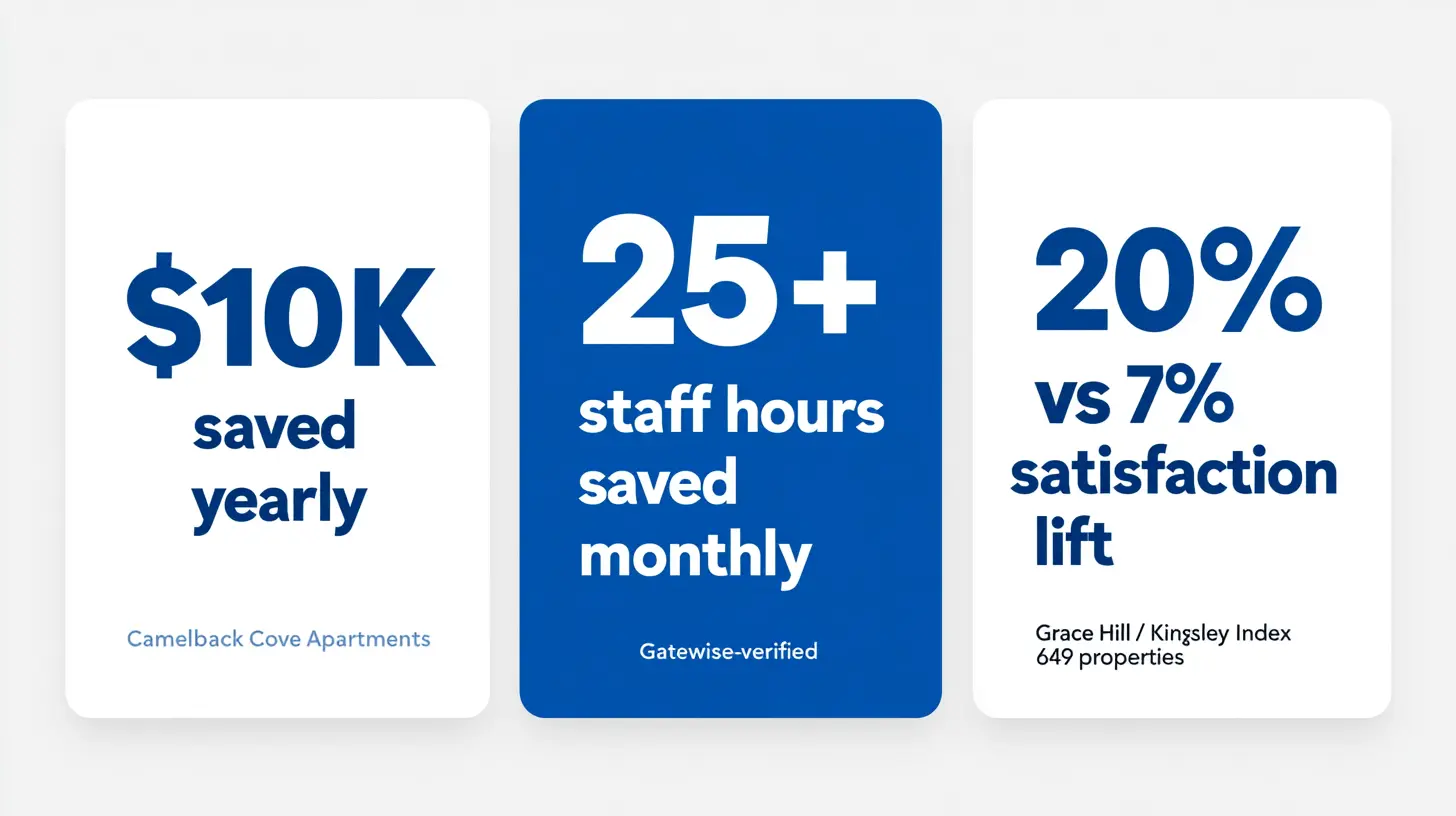
Arizona. Phoenix combines three pressures: sprawling garden-style communities, monsoon-season storms, and summer heat that punishes both hardware and any workflow requiring staff to walk the property to check gates. It is also home to the clearest single-property ROI proof in the Gatewise library: Camelback Cove Apartments, a 200+ resident garden-style community in Phoenix, saves roughly $10,000 per year and 25+ staff hours per month after consolidating fob and keycard management onto the platform. For Arizona operators, the proactive audit doubles as a labor audit: every access check that moves from a mid-July walk to a dashboard is staff time recovered.
The Eastern Seaboard. From the DC metro through the Northeast corridor, the access conversation changes shape. Summers noted on the podcast that only about a quarter of communities in his own DC-area market are gated, so the perimeter gate stops being the main event. The audit shifts indoors and vertical: lobby entrances, garages, elevators, amenity floors, package rooms, and the residential-versus-retail boundary in mixed-use buildings. Older East Coast building stock adds a retrofit dimension, since decades of accumulated fobs, buzzer intercom systems, and legacy call boxes rarely share a single source of truth, and keyless entry for apartments (smartphone, Apple Wallet, and Google Wallet credentials working at every reader) is the consolidation path that does not require gutting the lobby. And the weather case still holds: Climate Central's regional data shows the Northeast recorded 350 major weather-related outages over the same 2000 to 2023 period, nearly as many as the South, driven by nor'easters, ice, and coastal storms.
Same platform, same audit discipline, different emphasis by market. That is the point of running one system across every community type and every region.
The communities that come out of an access audit looking best are never the ones with the newest hardware. They are the ones where somebody can answer, in under a minute, three questions: What is working right now? Who has access right now? What happened at this door last Tuesday at 11 p.m.?
If answering those takes a site visit, a vendor call, and a shoebox of fob records, the audit has already told you what you need to know. Walk the property this week. Read your reviews tonight. And if you want a partner in the assessment, the Gatewise team will help you evaluate your community's access, from the front gate to the unit door.
What is a call box on an apartment building or gate? A call box is the legacy intercom panel at a gate or lobby entrance that lets visitors dial a resident or the office to be buzzed in. Traditional call boxes rely on physical directory hardware and phone lines, which makes them one of the most maintenance-prone components on a property. Modern platforms replace them with QR-based video intercom features like Gatewise Guest Access, which require no directory hardware at the entrance.
How often should a community or facility audit its access control? A full walk-through audit at least quarterly, with reputation monitoring (Google Alerts, review platforms) running continuously. Communities on a modern access control platform get continuous monitoring by default, since the management portal reports access point status and activity in real time.
What does keyless entry for apartments actually include? Keyless entry apartment systems replace physical keys, apartment key fobs, and shared codes with credentials on the resident's phone: an app, Apple Wallet or Google Wallet passes, plus PIN and voice fallbacks. On the Gatewise platform, one credential works across gates, doors, amenities, and unit locks, and provisions automatically from the property management system.
Do self storage gate access systems work at unstaffed facilities? Yes, and unstaffed and remotely managed facilities are where they matter most. Gatewise self-storage access gives tenants app-based gate entry, gives operators per-tenant access controls and complete audit logs, and handles walk-up visitors through QR-based Guest Access that connects them to a remote operator by video.
How does access control affect net operating income? On the expense side: eliminated fob and rekeying spend, fewer maintenance calls, and recovered staff hours (Camelback Cove reports about $10,000 saved yearly and 25+ hours monthly). On the revenue side: independent Grace Hill / Kingsley Index research found a 16.5 percent stronger link between access control and resident retention intent at Gatewise communities, and retention protects occupancy and reduces turn costs.
Are self-guided tours safe for the community? Run properly, yes. Self-guided tours use identity verification, time-limited credentials, a defined tour route, and complete access logging, so the operator controls and records the entire visit rather than handing a prospect an open door.
Gatewise offers a simple and modern gate entry system that provides residents with a mobile app and managers with a cloud-based management portal.