The assumption that seniors can't—or won't—use smartphone technology is quickly becoming outdated. To learn how modern access control is serving older residents across multifamily properties, we sat down with Lesly Alvarez, Customer Success Manager at Gatewise, for a candid conversation about what's working, what concerns property managers should address, and why this demographic is often more tech-ready than expected.
Q: Lesly, property managers sometimes hesitate to implement smartphone-based access control because they're concerned about older residents. What does the data actually tell us?
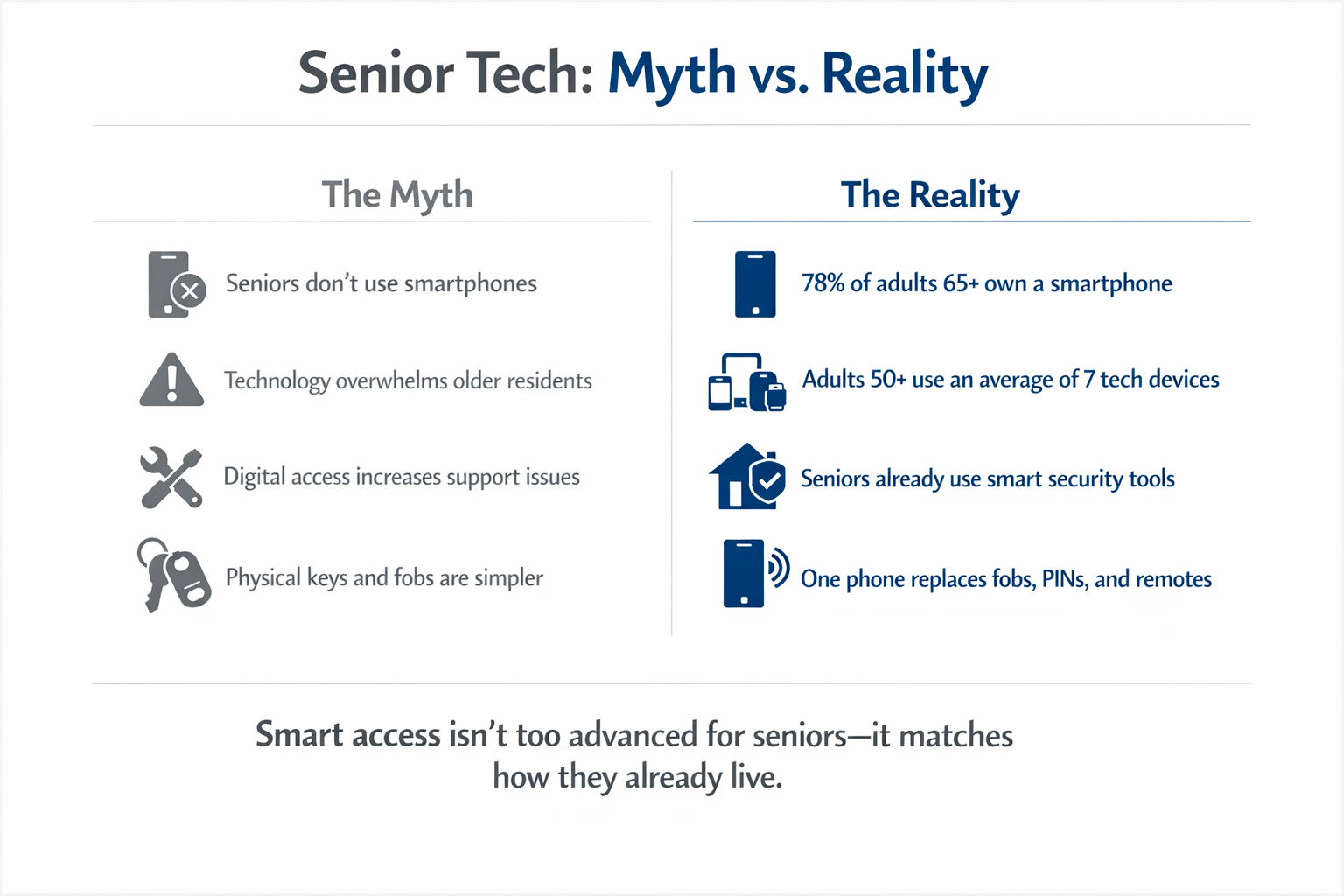
Lesly Alvarez: The data consistently surprises people. According to Pew Research Center's 2025 Mobile Fact Sheet, 78% of adults aged 65 and older now own a smartphone. That's a significant majority. And when you look at the 50-64 age group, smartphone ownership reaches 90%—essentially matching younger demographics.
The AARP 2025 Tech Trends research found that adults 50 and older now possess an average of seven tech devices and report using them daily. More than six in ten already use some kind of smart device to help with security, utilities, appliances, and lighting. So we're not introducing something foreign to them—we're meeting them where they already are.
Q: That's higher than many property managers might expect. Does this hold true across different property types?
Lesly Alvarez: Absolutely. Whether we're talking about seniors living in dedicated 55+ communities, mixed-age garden-style apartments, mid-rise buildings, or luxury high-rises, the smartphone adoption numbers are consistent. The key difference isn't the property type—it's how thoughtfully the technology is implemented and supported.
Q: What specific challenges do senior residents face with traditional access control systems?
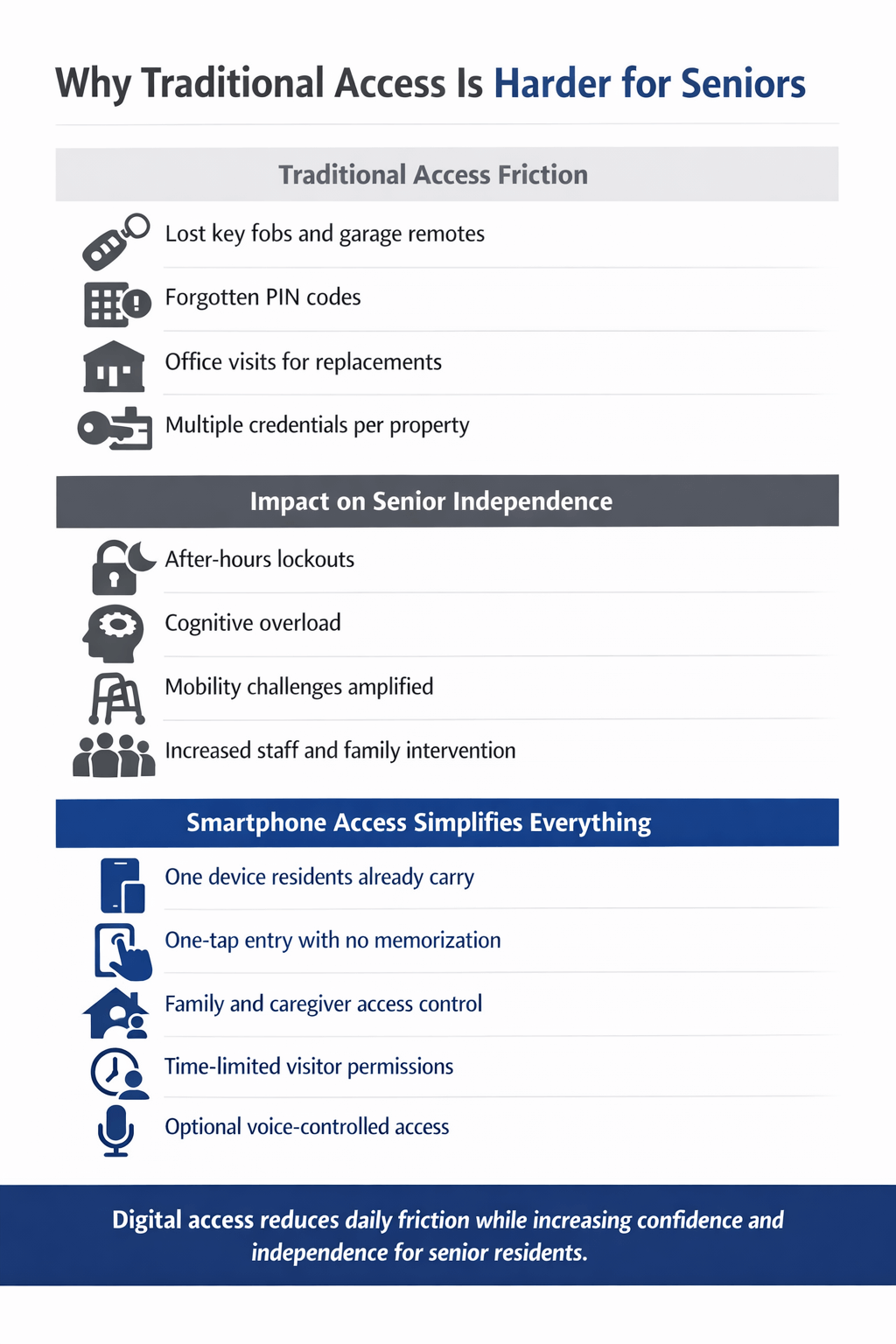
Lesly Alvarez: Traditional systems create friction at every turn, regardless of what type of property someone lives in. Lost key fobs requiring office visits. Forgotten PINs causing lockouts at night. Physical garage openers that are easy to misplace and expensive to replace.
For seniors managing mobility challenges or cognitive changes, these small frustrations compound into larger barriers to independence. In a garden-style community with multiple gates and amenity areas, that's multiple fobs to track. In a high-rise, it might be a fob plus a parking garage remote plus a pool access card. It adds up quickly.

Q: How does smartphone-based access control address these issues?
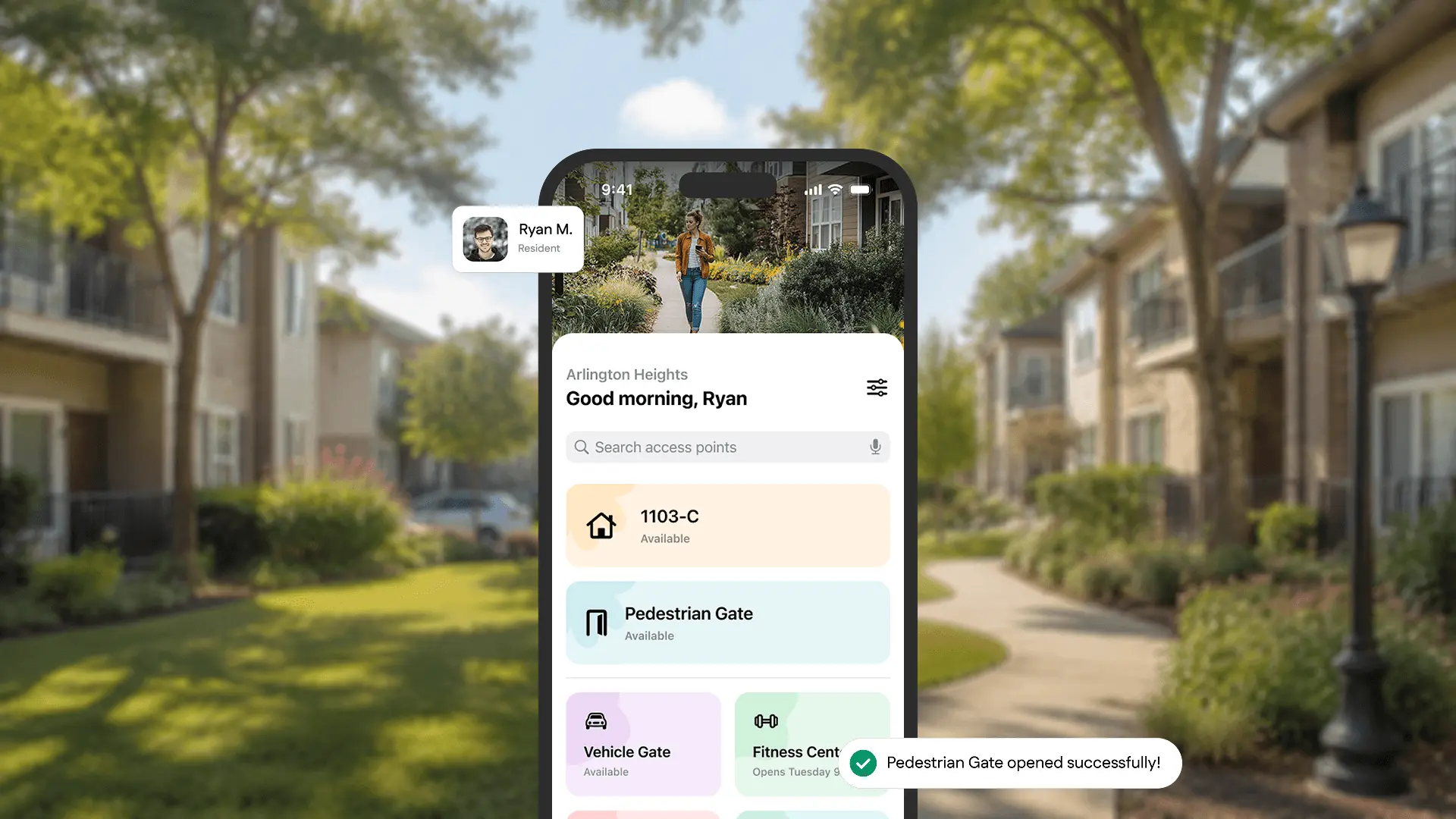
Lesly Alvarez: It consolidates everything onto one device they already carry everywhere. No separate fob to track. No PIN to remember. Just tap and enter.
But convenience is only part of the equation. Senior residents—whether in a dedicated senior community or a mixed-age property—also benefit from controlled visitor access for family members, healthcare providers, and home aides. Digital credentials can be issued remotely and scheduled for specific time windows. No more hiding spare keys or coordinating handoffs.
Q: How do you ensure the technology is actually usable for older adults?
Lesly Alvarez: This is where thoughtful design matters enormously. Academic research on mobile app design for older adults, published in the Journal of Medical Internet Research, identified two "golden rules" from extensive usability testing: simplify everything, and increase the size of touch targets.
We apply these principles directly. Rather than requiring complex navigation or multi-step authentication, residents simply open the app and tap a large, clearly labeled button to open their gate.

Q: What about residents who might have vision challenges or arthritis?
Lesly Alvarez: UX design research from Cadabra Studio emphasizes that body text for senior users should never be smaller than 16 points, with bold contrasting colors to accommodate age-related vision changes. Well-designed access apps follow these guidelines with high-contrast interfaces and oversized buttons.
Voice commands through Siri or Google Assistant offer an even simpler alternative. Residents can unlock entries hands-free, which is particularly valuable for those with arthritis or mobility limitations. We've seen this feature become a favorite among older residents across all property types.
Q: You mentioned family members and caregivers. How does digital access control support that network?
Lesly Alvarez: This is one of the most compelling benefits, honestly. Smart home research highlights how modern platforms allow caregivers or family members to manage access remotely through companion apps.
For seniors living in any type of multifamily property—whether it's a garden-style apartment in the suburbs or a mid-rise in the city—this transforms how families provide support. A family member can open the gate for a healthcare provider from across the country. Regular caregivers receive digital access that works only during scheduled shifts. Family members can receive notifications when their parent arrives home safely. There's no more FedEx-ing spare gate openers or making duplicate keys when new helpers come on board.
Q: How does this affect leasing and marketing for property managers?
Lesly Alvarez: Adult children increasingly participate in—or drive—the community selection process for aging parents. The ability to remotely monitor and manage access provides peace of mind that competitors using legacy systems simply cannot match. We've seen properties use these family-facing features as powerful marketing differentiators.
Q: Let's tackle some of the objections property managers raise. First: "My residents aren't tech-savvy enough."
Lesly Alvarez: The numbers contradict this assumption. With 78% of adults 65+ owning smartphones and using them daily, technology adoption among seniors has reached mainstream levels. Communities that implement smartphone access with proper onboarding support consistently report high adoption rates, even among their oldest residents.
Q: What about residents who genuinely don't want to use smartphones?
Lesly Alvarez: Good systems include alternatives. Keypads and fobs ensure every resident can still access the community through their preferred method. The goal is to offer better options, not mandate change. We typically see that even skeptical residents often try the smartphone option once they see neighbors using it successfully.
Q: "What if the internet goes down?"
Lesly Alvarez: This is where cellular-based systems shine. Unlike WiFi-dependent solutions, cellular access control maintains connectivity through mobile networks—the same reliability that keeps smartphones working during power outages. We also use Bluetooth as a backup for gates, so residents have multiple layers of connectivity, ensuring they can always get in.
For garden-style communities with sprawling layouts and limited hardwired infrastructure, this matters enormously. But it's equally important for mid-rise and high-rise properties, where a WiFi outage shouldn't mean residents are locked out. Emergency response integration continues operating during power outages, ensuring gates remain accessible to emergency services.
Q: Won't installation disrupt residents?
Lesly Alvarez: Modern access control hardware installs in hours, not weeks. Gatewise installations typically complete in 4-6 hours per access point, with minimal disruption to daily community operations. We coordinate with property management to schedule installations during lower-traffic times.
Q: How do the costs compare between legacy systems and digital access control?
Lesly Alvarez: Consider the ongoing costs of traditional access control. Key fobs and garage openers run $25-50 per unit, multiplied by every lost, broken, or move-out replacement. Locksmith calls cost $75-150 per visit when residents get locked out after hours.
Industry data shows typical garage door opener repairs range from $150-350, with costs rising when aging systems require repeated service. Then there's the administrative time processing access requests, deactivating former residents, and coordinating vendor entries.
Digital access eliminates most of these costs. Credentials are issued and revoked instantly through software—no physical hardware to purchase, lose, or replace. When a resident moves out, their access is deactivated with a click rather than a key retrieval chase.
Q: How quickly do properties typically see ROI?
Lesly Alvarez: For properties with significant senior populations specifically, the math often favors digital within the first year, with the gap widening as traditional systems age and require more frequent maintenance. The reduced administrative burden alone—not chasing down fobs, not coordinating after-hours lockouts—frees up staff time for higher-value activities.
Q: What makes the difference between a successful rollout and a frustrating one?
Lesly Alvarez: Successful rollouts follow a consistent playbook. Start with resident training sessions—in person, hands-on, and patient. Bring devices to common areas and walk residents through the app step by step. Research on technology adoption among older adults emphasizes that face-to-face demonstrations significantly improve comfort and confidence.
Involve family members early. Send information to emergency contacts before installation, explaining how they can receive guest access and monitor entries. This builds family buy-in and creates advocates who help their parents adopt the new system.
Q: Any tips for managing the transition period?
Lesly Alvarez: Keep backup methods available during transition. Allow residents to use both the old and new systems for 30-60 days while they build confidence with digital access. Provide 24/7 support access—knowing help is available reduces anxiety and encourages experimentation among hesitant users.
And celebrate early adopters. When tech-forward residents share positive experiences with neighbors, peer influence accelerates community-wide adoption. This is true whether we're talking about a 55+ community or a mixed-age property with senior residents.

Q: Where do you see senior-focused access control heading in the next few years?
Lesly Alvarez: The convergence of aging-in-place preferences, family caregiving technology, and senior smartphone adoption points in one direction: digital access control is becoming table stakes for competitive properties serving older residents.
AARP research indicates that nearly half of older adults have safety devices like alarms and door cameras, with another 40% expressing interest in owning them. The appetite for security technology among seniors isn't theoretical—it's documented, measured, and growing.
Properties that implement smart access control today aren't just solving current operational challenges. They're positioning themselves for a future where integrated safety systems, health monitoring, and access management work together to support residents aging safely in place—wherever that place might be.
Gatewise provides smartphone-based access control designed specifically for multifamily communities—including garden-style properties, mid-rise buildings, high-rise towers, and dedicated senior living communities. Our cellular-connected hardware works without WiFi infrastructure, installs in hours, and integrates with major property management platforms like Yardi, RealPage, and Entrata.
With transparent pricing, flexible 30-day contracts, and dedicated support for resident onboarding, Gatewise makes the transition to digital access straightforward for communities of any size.
Contact Gatewise for a free consultation and discover how smartphone access control can enhance security, simplify operations, and support the independence your senior residents value most.
Gatewise offers a simple and modern gate entry system that provides residents with a mobile app and managers with a cloud-based management portal.