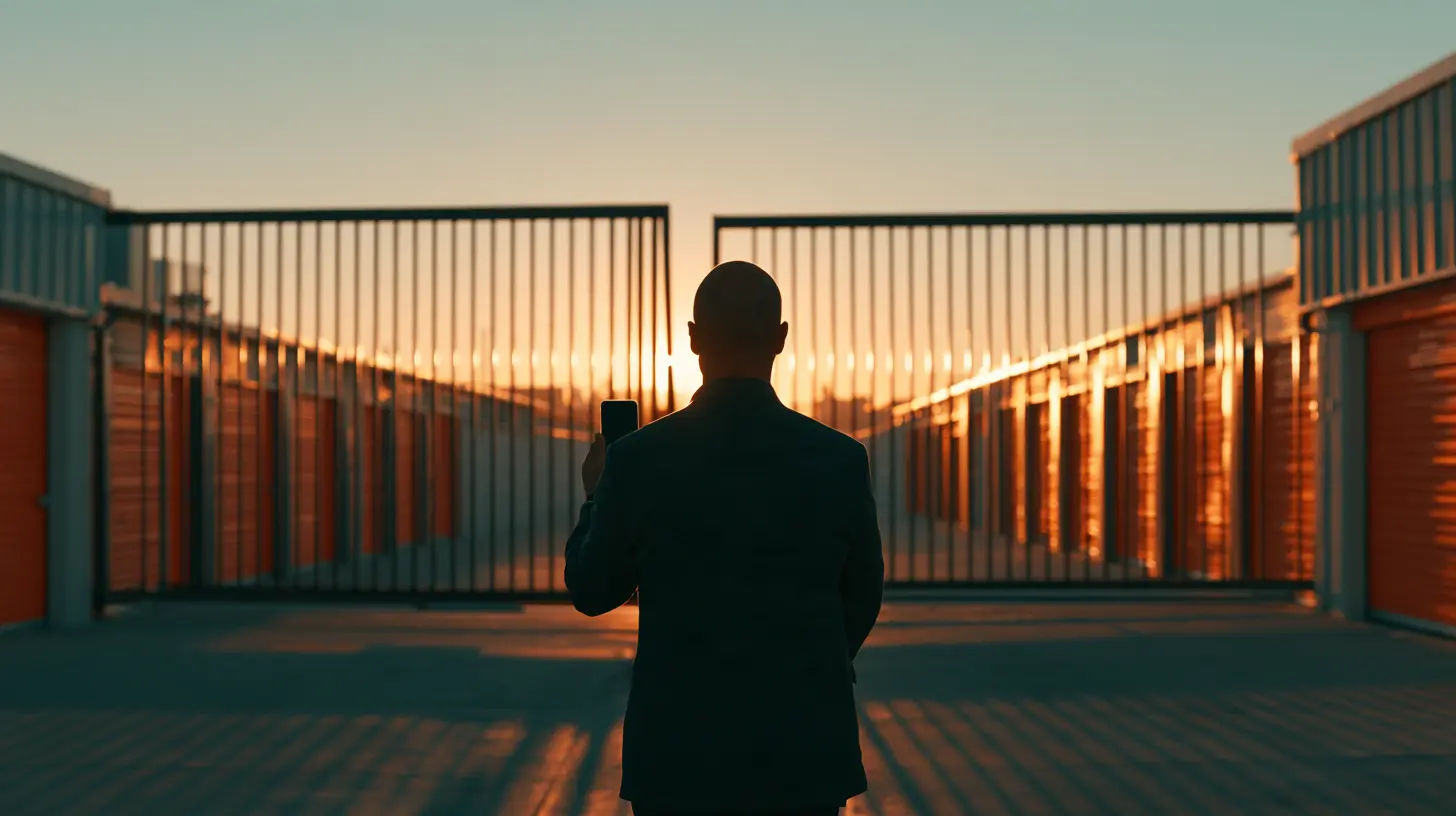
It's 9:47 PM on a Tuesday in East Austin. Maya, a software engineer relocating from San Francisco for a role at a fintech startup near The Domain, has just wrapped a video call with her new team. She pulls up Zillow on her phone, scrolling through apartments she's saved over the past two weeks. One property catches her eye—a garden-style community in Mueller with the amenities she wants and rent that fits her budget.
She's flying into Austin this Saturday for a whirlwind apartment hunt. But with only 48 hours to find a place before her start date, waiting until Monday morning for a traditional leasing office tour isn't an option.
This scenario isn't hypothetical. It's playing out thousands of times across Austin every month—and it's reshaping how leasing teams think about apartment showings, access control systems, and the intersection of security and convenience.
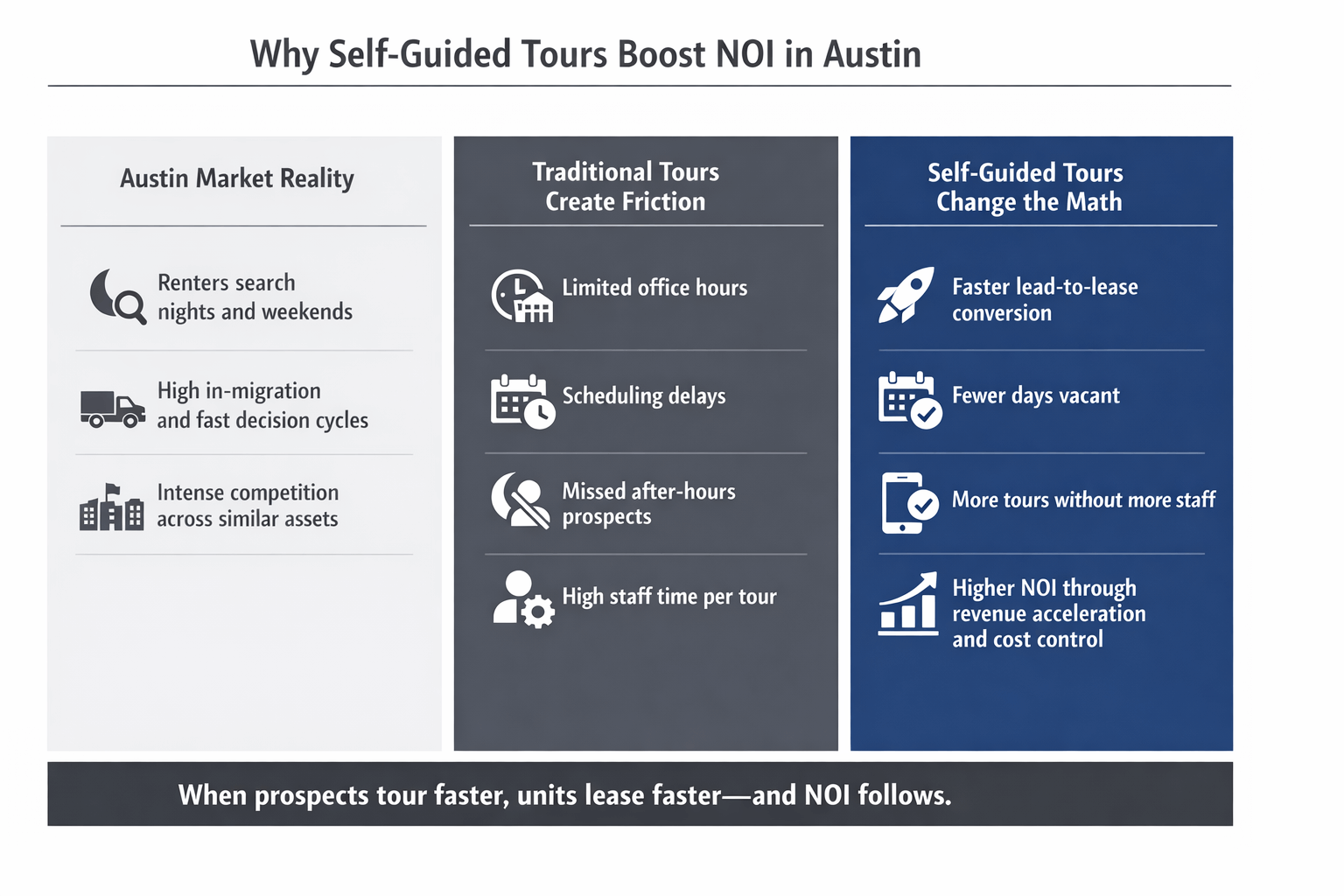
Austin's rental market operates at a pace that demands flexibility. According to RealPage Analytics, the metro absorbed 23,350 apartment units in the third quarter of 2025 alone—a figure that exceeded new supply and signaled continued strong demand despite record construction activity. With approximately 12,000 to 13,000 additional units expected to deliver in 2026, competition for qualified residents has never been more intense.
The demographics driving this demand tell an important story. Over 50% of Austin's population rents rather than owns, according to local market analysis, and the city consistently ranks among the top destinations for millennial renters nationwide. These tech-savvy professionals—many relocating from coastal markets for positions at Tesla's Gigafactory, Apple's campus, or the growing constellation of startups along the I-35 corridor—expect the same digital-first experience in apartment leasing that they encounter everywhere else in their lives.
Traditional leasing models simply can't keep pace. When a prospect researching apartments at 10 PM on a Thursday discovers your community online, they don't want to wait until Tuesday afternoon to schedule a tour. In a market where demand exceeded supply by absorbing 23,350 units in a single quarter, every hour of delay represents a potential lost lease.
Self-guided tours powered by smart access control technology eliminate the friction between prospect interest and property visit. Here's how the modern self-showing apartment experience works:
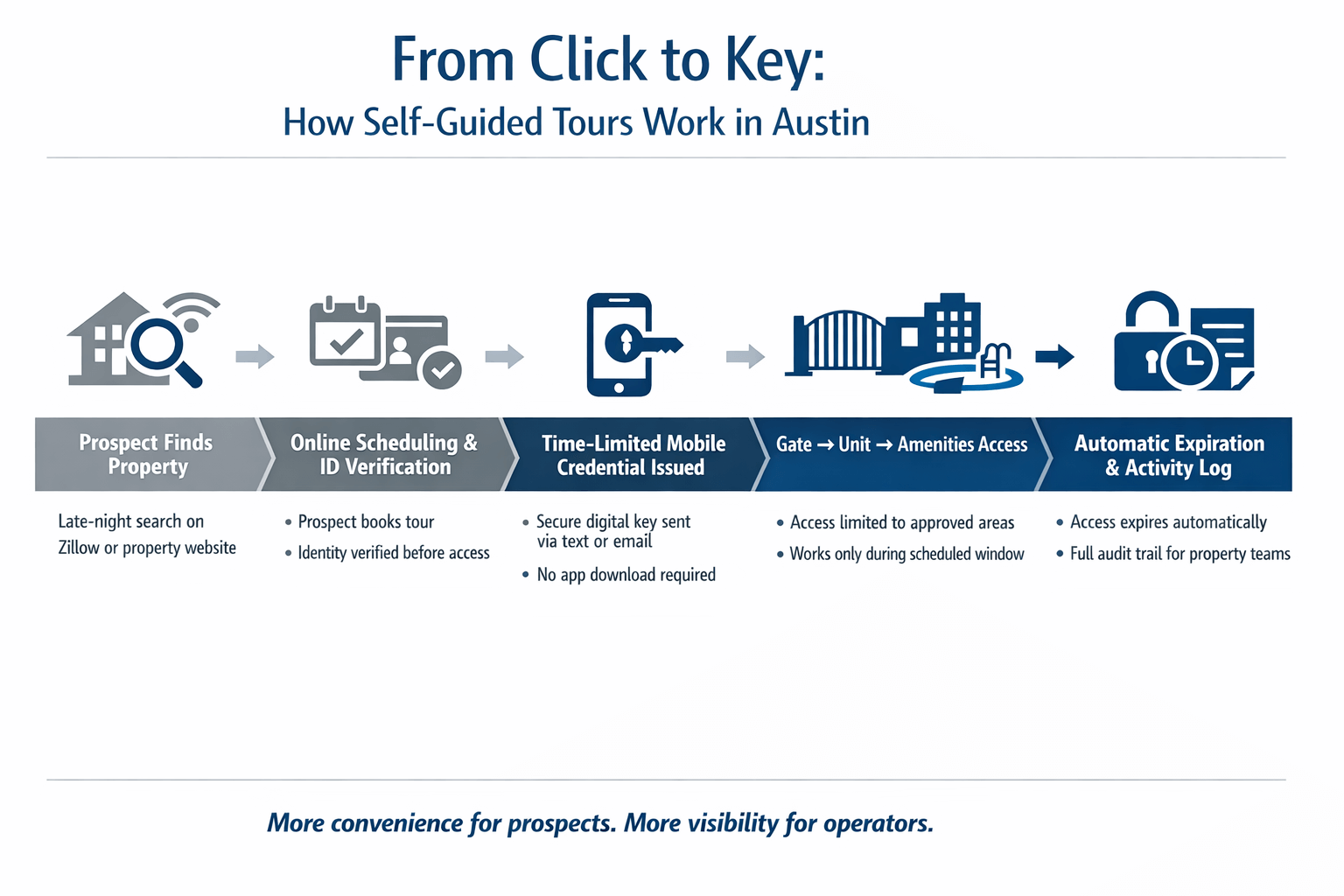
Scheduling and Verification: Prospects book tours through an online platform integrated directly into your property website. The system collects contact information and runs identity verification—creating an audit trail before anyone sets foot on the property. This verification step isn't just about convenience; it's a security measure that traditional walk-in tours have never offered.
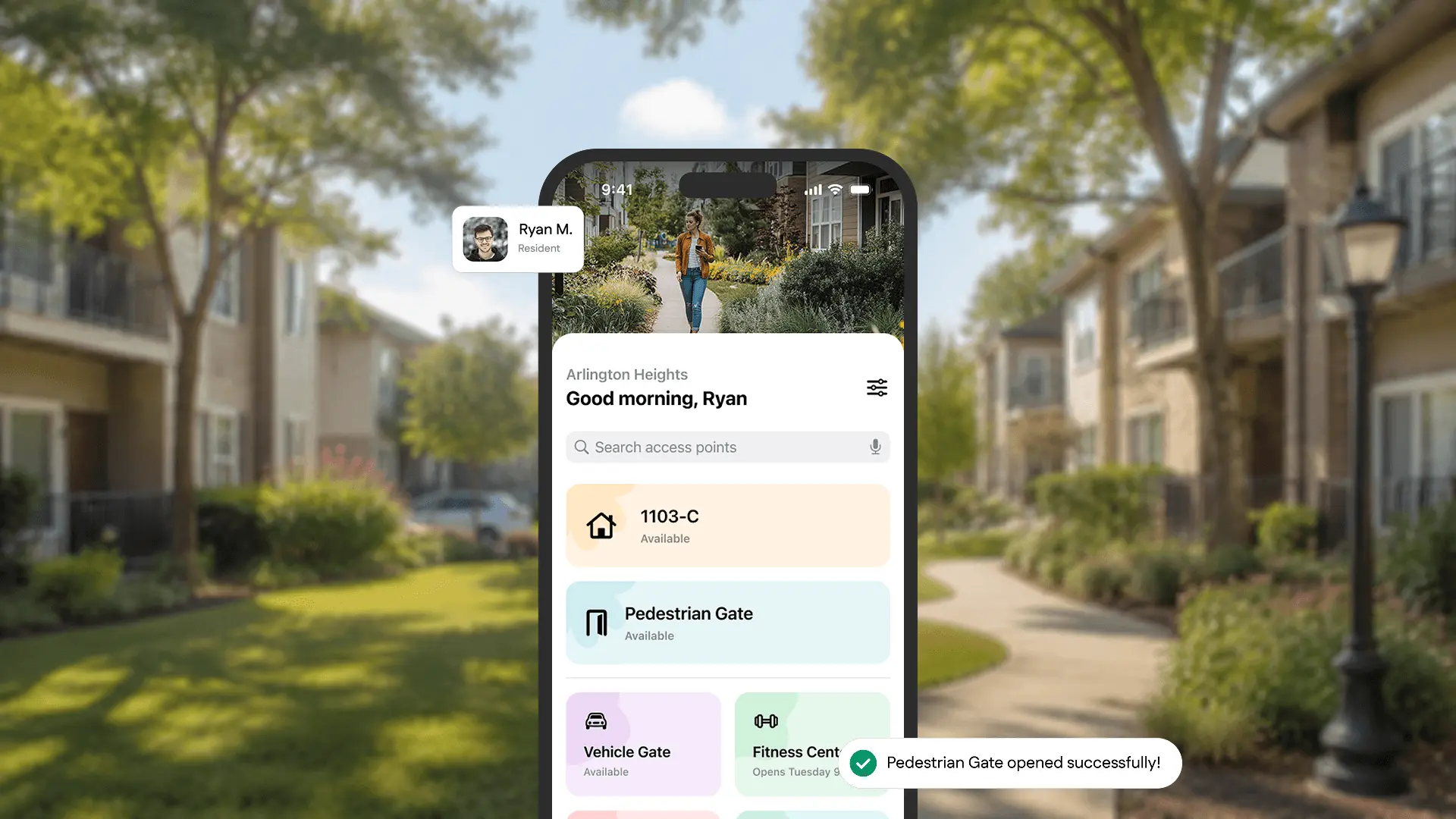
Time-Limited Mobile Access: Once verified, prospects receive a secure digital key via text or email—no app download required. This temporary credential grants access to designated areas during a specific time window. The key works with cloud-based access control infrastructure, unlocking gates, amenity spaces, and tour-ready units.
Automatic Expiration: When the scheduled tour window closes, access expires automatically. There's no need for staff to collect keys or worry about credentials being copied. The system maintains complete control while giving prospects the freedom to explore at their own pace.
Real-Time Monitoring: Throughout the tour, the management portal tracks access events. Property teams can see exactly who entered and which doors they opened. This visibility addresses the security concerns that have historically made property managers hesitant about unaccompanied showings.

For garden-style apartment communities—which dominate Austin's suburban growth corridors in areas like Round Rock, Cedar Park, and East Austin—gate access control serves as the first line of defense and the first impression for prospective residents.
Traditional gate systems create a leasing bottleneck. A prospect arrives at the community entrance, realizes they can't get in, and either waits for a leasing agent to meet them (assuming the office is open) or drives away frustrated. Self-guided tour technology transforms that gate from a barrier into a welcoming entrance.
The same mobile credential that opens apartment doors also operates vehicle and pedestrian gates during scheduled tour windows. Prospects can enter the community, park near the units they're touring, and navigate amenity spaces—all without coordinating schedules with staff. For properties in Austin's sprawling suburban submarkets, where garden-style layouts mean prospects might tour units spread across multiple buildings, this seamless gate-to-door access proves essential.
Modern mobile access control systems also address Austin's unique infrastructure challenges. Texas weather events—from extreme heat to unexpected freezes—have taught property operators the value of cellular-connected systems that continue operating when power fluctuates or internet connections drop. The best self-guided tour solutions use cellular technology at access points, eliminating dependence on property WiFi and ensuring prospects can complete tours even during service disruptions.
Understanding the NOI impact of self-guided tours requires looking beyond simple operational savings. Net operating income—calculated as total rental income minus operating expenses—serves as the fundamental metric for evaluating multifamily property performance. According to PropertyMetrics, NOI measures a property's ability to generate income before considering capital structure and financing costs.
Self-guided tours affect NOI through multiple channels.
Revenue Acceleration: Every day a unit sits vacant costs money. Self-guided tours accelerate the leasing funnel by eliminating scheduling friction. When prospects can tour at 7 AM before work or 8 PM after dinner, they move from interest to application faster. Properties offering self-guided options report higher lead-to-lease conversion rates because they're capturing prospects at peak motivation rather than letting interest cool during multi-day scheduling delays.
Expense Reduction: Traditional agent-led tours consume significant staff hours. Beyond the tour itself, leasing agents spend time coordinating schedules, preparing units, meeting prospects who may or may not show up, and following up afterward. Self-guided tours don't eliminate leasing staff—but they allow team members to focus on high-value activities like building relationships with serious prospects and managing the application-to-move-in process.
For regional managers overseeing portfolio performance, the staffing efficiency gains compound across properties. When each community can conduct more tours without proportional staffing increases, labor costs per lease improve portfolio-wide.
Competitive Positioning: In Austin's competitive market, touring convenience has become a differentiator. The Austin Apartment Association's State of the Industry report notes that nearly 75% of Class A properties are currently offering concessions of some kind. When everyone is competing on price, amenities, and location, the leasing experience itself becomes a way to stand out.
Properties offering self-guided tours signal to tech-forward renters that they'll be living in a community that embraces modern solutions. For a prospect choosing between two similar buildings, the one that let them tour on their own schedule often wins.
The question property managers ask most frequently about self-guided tours: "How do I know this is safe?"
The honest answer: properly implemented self-guided tours often provide better security visibility than traditional showings.
Consider the typical agent-led tour. A prospect calls the leasing office, gives a name and phone number (which may or may not be verified), and shows up to tour. The agent meets them, walks through units, and says goodbye. Unless the prospect completes an application, there's often no record of who visited the property.
Self-guided tour systems flip this equation. Before accessing the property, prospects complete identity verification that creates a documented audit trail. The system logs exactly when they entered and which access points they used. If an incident occurs, property managers have detailed access records to review—records that simply don't exist for most traditional tours.
Modern access control platforms offer additional security layers.
Time-Bound Credentials: Digital keys work only during scheduled windows. There's no risk of prospects sharing codes that remain active indefinitely or keys being duplicated.
Successful self-guided tour implementation follows predictable patterns. Austin properties leading the way share common approaches.
Start with Model Units and High-Demand Floorplans: Rather than enabling self-guided access across an entire portfolio immediately, focus on units that generate the most tour requests. This limits complexity while delivering immediate impact on the highest-value prospects.
Train Leasing Teams on Follow-Up Workflows: Self-guided tours change the leasing conversation. Instead of reciting features during a walkthrough, agents focus on answering questions after the prospect has already experienced the space.
Communicate the Value to Prospects: Don't assume prospects understand how self-guided tours work. Clear instructions, expectations about what they'll access, and contact information for questions make the difference between a smooth experience and a frustrated prospect who couldn't figure out how to enter.
Gather Feedback and Iterate: Track not just conversion metrics but prospect feedback about the tour experience. Are people spending enough time in units? Are certain access points creating confusion? Continuous improvement keeps the program optimized.
For regional managers overseeing multiple Austin properties, self-guided tours offer unique portfolio optimization opportunities.
Centralized management portal access means one login can monitor tour activity across all communities. Instead of calling individual properties to understand leasing traffic, regional managers can pull real-time data showing which properties are generating tours, which floorplans attract the most interest, and where conversion rates suggest process improvements.
This visibility enables smarter resource allocation. If one property consistently fills tour slots while another struggles to generate interest, marketing spend can shift accordingly. If conversion rates differ significantly between properties with similar unit mixes, operational practices can be compared and best practices shared.
Portfolio-level implementation also reduces vendor management complexity. Working with a single access control partner across properties streamlines training, support, and integration—compared to managing different systems at each community.

The Austin apartment market is entering a new phase. After record construction deliveries in 2024 and 2025, the pipeline is moderating, and demand continues strong. RealPage forecasts suggest demand will exceed supply in 2026, potentially tightening occupancy toward the effectively full 95% mark.
In this environment, operational efficiency becomes even more critical. Properties that can convert interested prospects into signed leases faster will capture the upside of strengthening demand. Those still forcing prospects to work around limited office hours will lose qualified renters to more convenient competitors.
Self-guided tours have shifted from innovation to expectation. The question for Austin leasing professionals isn't whether to offer them—it's how quickly they can implement solutions that balance prospect convenience with the security and control properties require.
The technology enabling self-guided tours has matured significantly. Modern cloud-based access control systems designed specifically for multifamily communities handle the complexity of time-limited credentials, identity verification, and integration with property management software—while providing the reliability Austin properties need to operate confidently.
When evaluating solutions, Austin property teams should prioritize:
The leasing teams transforming apartment showings across Austin aren't replacing human connection—they're strategically deploying it. By handling routine tours through secure self-showing technology, they free staff to focus on the conversations that convert interested prospects into long-term residents.
Maya, our software engineer relocating from San Francisco? She booked a self-guided tour for 6:30 PM on Saturday, toured three units in 45 minutes at her own pace, submitted an application from her phone while sitting in the community dog park, and signed a lease before her flight home Sunday evening.
That's not the future of apartment leasing in Austin. It's already happening.
Ready to bring self-guided tours to your Austin properties? Request a demo to see how Gatewise's access control platform transforms leasing operations while maintaining the security your residents expect.
Related Reading:
Gatewise offers a simple and modern gate entry system that provides residents with a mobile app and managers with a cloud-based management portal.